
How to Compare Radon Mitigation Quotes: Questions Every Homeowner Should Ask Before Hiring a Contractor
- Liberty Radon Diagnostics
- Jul 28
- 10 min read
Updated: Jul 30
Receiving a radon test result above the EPA action level can be concerning. For many homeowners, the next step is finding a qualified radon mitigation contractor and deciding which proposal is the right choice.
However, comparing mitigation quotes can sometimes feel confusing. Two contractors may provide different recommendations, different pricing, and different approaches to solving the same problem.
The lowest quote is not always the best value.
A radon mitigation system is a long-term investment in your home's indoor environment. Before making a decision, homeowners should take the time to understand exactly what is being proposed, what is included, and how the contractor plans to complete the work.
One of the best steps a homeowner can take is to contact at least three qualified radon mitigation companies and compare their recommendations. This allows you to better understand your options, ask questions, and choose the solution that best fits your home.
Every home is different. System designs may vary based on:
Foundation type
Home construction
Basement, crawlspace, or slab conditions
Access limitations
Existing building features
Because of this, multiple proposals may not look identical—and that is not necessarily a problem. What matters is understanding why each contractor is recommending their approach.
Throughout this guide, we will cover important questions every homeowner should ask when comparing mitigation proposals.
At the end of this article, we have included a Radon Mitigation Quote Comparison Guide that you can use while reviewing proposals from different contractors. This printable resource is designed to help you compare important details side-by-side and make a more informed decision.
In This Guide
What Radon Level Will the Mitigation Company Guarantee?
Understanding Warranty Coverage and Follow-Up Support
Understanding the Complete Scope of Work
Ask What Materials Will Be Used
Protecting Your Home During Installation
Understanding Pressure Field Extension Testing
Combustion Appliance and Backdraft Testing
System Alarms and Monitoring
Electrical Work and Permit Requirements
Verifying Insurance and Credentials
Warning Signs That Require More Questions
Compare Value, Not Just Price
Why Independent Post-Mitigation Verification Matters
Keep Everything in Writing
1. Ask: What Radon Level Do You Guarantee?
One of the first questions homeowners should ask a mitigation contractor is:
"What radon level do you guarantee after installation?"
The U.S. Environmental Protection Agency (EPA) recommends taking action when radon levels are at or above 4.0 pCi/L. The EPA also recognizes that there is no known completely risk-free level of radon exposure. https://www.epa.gov/radon/what-epas-action-level-radon-and-what-does-it-mean
Different contractors may provide different guarantees depending on the home's construction, system design, and other factors.
Ask:
What radon level do you guarantee after installation?
Is the guarantee provided in writing?
How long does the guarantee last?
What happens if the system does not achieve the expected reduction?
Understanding the guarantee helps homeowners know what results they should expect and what options are available if additional work is needed.
A clear proposal should explain not only what system will be installed, but also what performance the homeowner should expect afterward.
2. Ask About Warranty Coverage and Follow-Up Support
A mitigation system is designed to reduce radon levels, but homeowners should also understand what happens if the system does not achieve the expected results after installation.
Before hiring a contractor, ask:
What does your warranty cover?
How long does the warranty last?
Does the warranty cover additional diagnostic work?
If radon levels remain elevated, will adjustments or modifications be covered? (This is a big one)
Could there be additional costs if the system requires changes?
Who is responsible for additional work needed to improve system performance?
A written warranty should clearly explain the responsibilities of both the homeowner and the contractor.
For example, if a system requires adjustments, additional suction points, or other modifications to achieve the expected performance, homeowners should understand whether those changes are included or whether they may result in additional charges.
A professional contractor should be willing to explain:
What is covered under warranty
What is excluded
How performance concerns are handled
What steps are taken if the system does not achieve the expected result
The goal is not to assume problems will occur. Quality mitigation systems are designed to perform effectively when properly installed.
The goal is to make sure expectations are clear before the project begins.
3. Understand the Complete Scope of Work
Before choosing a contractor, ask them to explain the entire project from beginning to end.
A professional mitigation proposal should clearly describe:
Where the suction point(s) will be installed
Why that location was selected
Where the piping will run
Where the fan will be located
How the system will interact with your home
What areas of the home may be affected during installation
Questions you may want to ask include:
Will the piping be installed inside or outside the home?
Will concrete need to be drilled?
Will drywall, siding, or other finished areas be modified?
Will roof penetrations be required?
What will the finished installation look like?

Do not hesitate to ask questions if you are unfamiliar with any part of the process.
Terms such as suction points, pressure field extension, manometers, and fan locations may be new to many homeowners. A professional contractor should be willing to explain what these terms mean and why they are recommending a specific approach.
A good company will be happy to spend a few extra minutes answering questions, easing concerns, and helping you understand the proposed work. Taking the time to educate a homeowner is often a sign that a contractor values transparency and wants to earn your business.
Remember, this is your home. While the final system design should be based on sound mitigation principles and building conditions, homeowners should feel comfortable discussing certain design preferences with the contractor. Depending on the home's layout and technical requirements, you may be able to have input on where the fan is located, how the piping is routed through the home, or how the system is positioned to accommodate future renovations or finished living spaces.
Many contractors also offer options that can improve the finished appearance of the system, such as custom-colored PVC piping that blends more naturally with the home's exterior. Don't hesitate to ask what options are available—an experienced contractor should be willing to discuss practical solutions that balance performance with aesthetics. Most importantly, make sure the complete scope of work is documented in the written contract.
4. Ask What Materials Will Be Used
A mitigation system is made up of multiple components, and homeowners should understand what they are purchasing.
Ask the contractor about:
Pipe material and size
Fan manufacturer and model
System monitoring equipment
Exterior supports and mounting methods
Sealants and materials used during installation
You do not need to become a mitigation expert, but you should understand the major components being installed in your home.
A detailed proposal should provide enough information that you understand what work is being performed and what materials are included.
5. Ask How Your Home Will Be Protected During Installation
A quality radon mitigation system should not only reduce radon levels—it should also be installed with attention to your home's long-term integrity.
Many installations require penetrations through concrete, masonry, siding, or roofing materials. Homeowners should understand how these areas will be sealed and protected.
Ask:
How will foundation penetrations be sealed?
What materials will be used around exterior piping?
How will exterior mounting points be weatherproofed?
How will roof penetrations be sealed and flashed, if applicable?
What steps are taken to help prevent water intrusion?
How will the home be safeguarded from construction debris, such as using tarps to protect floors and operating air filters to reduce dust levels from drilling?
Proper sealing and weatherproofing are important parts of quality workmanship. A professional contractor should consider both radon reduction and how the installation affects the existing structure.
6. Ask About Pressure Field Extension Testing
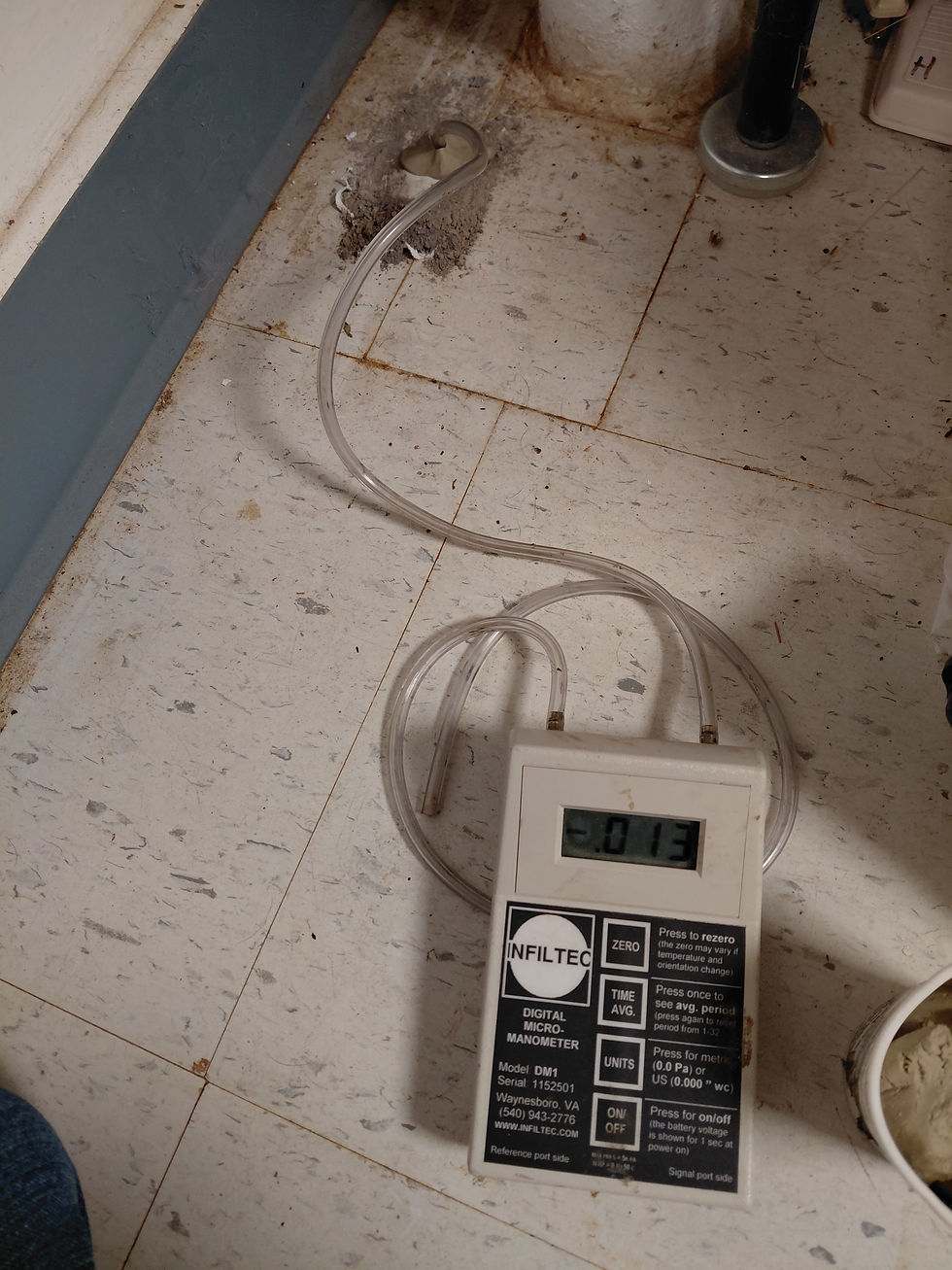
Pressure field extension testing is an important part of understanding how a mitigation system is designed.
This process helps determine whether the suction created by the mitigation system extends into the areas beneath the foundation where soil gases may enter the home.
Ask:
Will pressure field extension testing be performed?
How is the system design evaluated?
How does the contractor determine whether additional suction points are needed?
Understanding how the contractor evaluates system performance can help homeowners feel more confident about the recommended design.
7. Ask About Combustion Appliance and Backdraft Testing
Some homes contain fuel-burning appliances such as furnaces, water heaters, fireplaces, or boilers.
Because radon mitigation systems can change air pressure relationships within a home, homeowners should understand how the installation may interact with existing combustion appliances.
Ask:
Does your installation process include combustion appliance testing?
Do you perform backdraft testing before or after installation?
If not, who should perform this evaluation?
Are there any concerns with my home's existing heating equipment or ventilation?
Backdraft testing helps evaluate whether combustion appliances are operating properly and whether combustion gases could potentially enter the living space.
A professional mitigation contractor should understand the importance of maintaining proper building conditions and should be willing to discuss any concerns related to combustion safety.
8. Ask About the System Alarm and Monitoring
Active radon mitigation systems operate continuously, so homeowners should understand how system operation is monitored.
Ask:
Does the system include a monitoring device?
How will I know if the fan stops working?
Where is the warning device located?
What should I do if the system indicates a problem?
Knowing how your system communicates potential issues helps you properly maintain confidence in the system over time.
9. Ask About Electrical Work and Permits
Most active mitigation systems require electrical power for the fan.
Before installation begins, ask:
Who will complete the electrical work?
Is a licensed electrician required?
Are permits required in my municipality?
Who is responsible for obtaining permits?
Will all electrical work meet applicable requirements?
Being aware of these responsibilities in advance can help avoid unforeseen problems during installation or later if the homeowner decides to sell the property.
10. Verify Insurance and Credentials
Before hiring any contractor, homeowners should feel comfortable asking about qualifications and insurance coverage.
Consider asking for information regarding:
Radon mitigation certification (click the link to view more info for Pennsylvania Homeowners)
General liability insurance
Workers' compensation coverage, if applicable
Business credentials
Permit responsibilities
A professional contractor should be comfortable providing information that allows homeowners to make an informed decision.
11. Things That Should Prompt More Questions
Most radon mitigation professionals take pride in explaining their work and helping homeowners understand the proposed system.
However, homeowners should ask additional questions if a proposal is unclear or missing important details.
Consider requesting clarification if a proposal:
Only provides a total price without explaining the scope of work
Does not explain where the system will be installed
Does not identify major system components
Does not explain warranty coverage
Does not discuss post-installation testing
Leaves you unsure what the finished installation will look like
The goal is not to judge a contractor based on one missing detail. The goal is to make sure you understand what you are purchasing. A professional proposal should provide confidence—not confusion.
12. Compare Value, Not Just Price
When comparing mitigation quotes, it can be tempting to focus only on the lowest number.
However, two proposals with different prices may also include differences in:
System design
Materials used
Warranty coverage
Documentation provided
Permit handling
Follow-up support
Verification options
A lower price may appear attractive, but homeowners should consider the complete value of the proposal.
Ask yourself:
Did the contractor explain the recommended system?
Did they answer my questions?
Is the work clearly documented?
Do I understand what is included?
Do I feel confident about the company I am choosing?
The best choice is usually the contractor who provides the clearest explanation, strongest communication, and appropriate solution for your home—not simply the lowest price.
13. Consider Independent Post-Mitigation Verification Testing
As homeowners place greater value on transparency and documented results, independent radon testing provides an objective way to verify that mitigation efforts have achieved the intended outcome.
Installing a mitigation system is an important step, but installation alone does not confirm how effectively the system is performing.
The only way to verify the final radon level is through properly conducted post-mitigation radon testing.
Some mitigation companies offer post-installation testing as part of their services. However, some homeowners prefer independent verification to provide an additional layer of confidence.
When the same company designs, installs, and evaluates a mitigation system, some homeowners may prefer an independent certified measurement professional to verify the final results.
Independent verification helps ensure:
Final radon levels are measured objectively
Results are documented by a separate certified professional
Homeowners have confidence the system is performing as intended
Future buyers have clear documentation of the home's radon history
A quality mitigation contractor should welcome verification testing because it provides homeowners with confidence that the system is working properly. If you would like to learn more about why some property owners choose independent radon testing instead of using the same company for both testing and mitigation, read our article:
14. Keep Everything in Writing
Before signing an agreement, make sure important details are included in the written contract.
This may include:
Total project cost
Scope of work
Materials
Fan model
Warranty information
Guaranteed radon level
Permit responsibilities
Electrical work
Expected timeline
Post-installation testing expectations
A detailed written agreement helps ensure both the homeowner and contractor understand what is expected before work begins.
The Bottom Line: Make an Informed Decision
Choosing a radon mitigation contractor is about more than finding the lowest quote.
A quality mitigation project begins with clear communication, a detailed proposal, and a homeowner who understands the work being performed.
Asking questions is not about challenging a contractor. It is about making an informed decision and having confidence in the investment you are making in your home.
At Liberty Radon Diagnostics, we do not install mitigation systems. Our role is to provide independent radon measurement and objective data so homeowners can understand their results and make informed decisions before and after mitigation.
📄 Free Printable Resource: Radon Mitigation Quote Comparison Guide (PDF)
Need Independent Radon Verification?
Whether you are verifying a newly installed mitigation system or simply want objective information about your home's radon levels, Liberty Radon Diagnostics provides professional, independent radon measurement throughout Philadelphia and surrounding communities.
About the Author
Moises Serrano is the owner of Liberty Radon Diagnostics LLC, an independent radon measurement company serving Philadelphia and surrounding communities. Liberty Radon Diagnostics performs radon testing and diagnostics only and does not install mitigation systems, allowing for unbiased measurement results.

Comments